
-
Register Now for a Free Account!Unlock additional site access with your free account today, takes less than a minute, and guaranteed no spam - ever. Register Now!
Cruising Earth

Cruise Planning Guide
Cruise Planning Guide Contents
Note: This guide provides general cruise planning information applicable to most cruise lines and itineraries. For cruise line-specific information, see our individual cruise line guides.
Introduction
Planning a cruise involves much more than simply choosing a ship and destination. From selecting the right itinerary and cabin to understanding travel documents, budgeting, insurance, embarkation, and shore excursions, making informed decisions before you sail can help you avoid common mistakes while making the most of your vacation.
This guide covers the general planning information that applies to nearly every cruise, regardless of destination or cruise line. Once you've finished here, continue with our Cruise Packing Guide, Cruising on a Budget, and our cruise line-specific guides for information tailored to your upcoming voyage.
Pre-Cruise Checklist
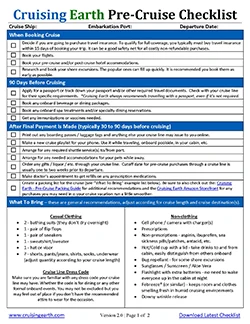
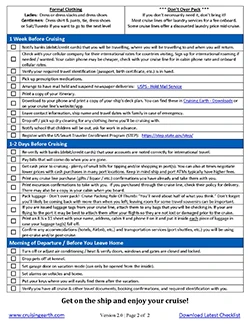
Preparing for a cruise involves much more than packing your suitcase. Final payments, travel documents, online check-in, shore excursions, transportation, hotels, and notifications all need to be completed before embarkation day. Missing even one small item can create unnecessary stress or delays during your vacation.
To help you stay organized, we've created a comprehensive printable checklist that walks you through every stage of the planning process, from the day you book your cruise until the day you board your ship.
Required Identification / Travel Documents
- Passport: A valid passport book is strongly recommended for every cruise, even when alternative documentation may be accepted. If you miss your ship, need emergency medical transportation home, or unexpectedly end your cruise in a foreign country, a passport can save significant time, expense, and complications.
- Alternative Documentation: Some closed-loop cruises may allow alternative proof of citizenship, such as a certified birth certificate and government-issued photo identification. Requirements vary by cruise line and nationality, so always verify acceptable documentation before traveling.
- Passport Validity: Many countries require passports to remain valid for at least six months beyond your scheduled return date. Review the entry requirements for every destination on your itinerary well before departure.
- Minor Travel Consent Forms: Children traveling without both legal parents or guardians should carry a notarized travel consent form whenever appropriate. Proper documentation can help prevent delays during embarkation or while visiting foreign ports. Download our Minor Travel Consent Forms.
- Student & Military Identification: If applicable, carry your student or military ID while traveling. Although discounts are uncommon onboard, they may occasionally be available in ports, museums, attractions, or through independent excursion providers.
- Printed Copies: Even if your cruise line uses a mobile app, it's still a good idea to carry printed copies of boarding documents, travel confirmations, hotel reservations, excursion confirmations, and transportation details in case your mobile device becomes unavailable.
Cruise Line Apps
- Download Before You Travel: Nearly every major cruise line now offers a mobile app that plays an important role before and during your cruise. Download the app well before embarkation day and become familiar with its features.
- Before Embarkation: Most cruise line apps allow you to complete online check-in, upload travel documents, select an arrival time, review your itinerary, purchase beverage or Wi-Fi packages, reserve dining, book shore excursions, and make spa or entertainment reservations.
- While Onboard: Cruise line apps often become your primary planning tool once onboard, providing daily schedules, restaurant information, deck plans, activity listings, onboard account balances, reservation management, and ship messaging features.
- Wi-Fi Requirements: Many onboard app features work without purchasing a full internet package, provided you're connected to the ship's internal Wi-Fi network. Internet access is typically only required for features that communicate outside the ship.
- Line-Specific Features: Every cruise line offers a slightly different experience. Some include digital room keys, location services, wearable technology, or personalized planning tools. Review our individual cruise line guides for information specific to your upcoming cruise.
Cruise Costs & Budgeting
- Plan Beyond The Cruise Fare: The advertised cruise fare is only one part of your total vacation cost. Building a realistic budget before you book can help prevent unexpected expenses later.
- Pre-Cruise Expenses: Budget for items such as luggage, clothing, travel accessories, pet boarding, child care, passport fees, and other preparations before your vacation begins.
- Transportation: Include airfare, fuel, parking, hotels, rental cars, shuttle services, meals while traveling, and any other transportation costs associated with getting to and from your embarkation port.
- Cruise Fare: Your total cruise cost may include the base fare, taxes, port fees, prepaid gratuities, travel protection, beverage packages, Wi-Fi, specialty dining, or other optional purchases made before sailing.
- Onboard Spending: Additional expenses may include specialty dining, premium beverages, internet access, shore excursions, spa treatments, casino gaming, shopping, professional photography, laundry services, and gratuities on cruise lines where they are not already included.
- Port Expenses: Budget for meals ashore, transportation, admission fees, shopping, independent excursions, and other purchases made while visiting ports of call.
- Emergency Fund: Reserve an additional 10–20% of your planned vacation budget for unexpected expenses such as medical care, travel delays, missed flights, or spontaneous opportunities that arise during your trip.
- Notify Your Financial Institutions: Before traveling internationally, notify your bank and credit card companies of your travel dates and destinations if required. This can help prevent legitimate purchases from being declined due to suspected fraud.
- Looking To Save Money? For additional tips on reducing cruise costs without sacrificing your vacation experience, see our Cruising on a Budget guide.
Medical Insurance
- Verify Your Coverage: Before traveling, contact your health insurance provider to determine exactly what medical coverage applies while traveling domestically, internationally, and aboard a cruise ship.
- Carry Your Insurance Information: Always keep your medical insurance card and any emergency contact information with you while traveling.
- Onboard Medical Centers: Cruise ships maintain medical facilities capable of treating many common illnesses and injuries. Medical services are provided for an additional charge, and costs can be significant depending on the treatment required.
- Emergency Medical Evacuation: Serious medical emergencies may require evacuation by helicopter or air ambulance, particularly when sailing far from shore. These services can be extremely expensive without adequate insurance coverage.
- Travel Insurance: Many travel insurance policies include emergency medical coverage and medical evacuation benefits that supplement your existing health insurance while traveling.
Travel Insurance
- Highly Recommended: Travel insurance can protect your investment if unexpected events force you to cancel, interrupt, or delay your vacation. Coverage may also include medical emergencies, emergency evacuation, baggage delays, and travel interruptions.
- Purchase Early: Many travel insurance policies provide their greatest benefits when purchased soon after making your initial trip deposit. Purchasing early may also qualify you for additional coverage options, including pre-existing medical condition waivers and optional "Cancel For Any Reason" coverage when available.
- Insure Your Entire Trip: Your insured trip cost should include all prepaid, non-refundable vacation expenses, such as your cruise fare, airfare, hotels, transfers, excursions, beverage packages, specialty dining, and other prepaid purchases.
- Cruise Line Insurance: Most cruise lines offer their own travel protection plans. These may provide convenient coverage, but it's often worthwhile to compare benefits and pricing with independent travel insurance providers before making your decision.
- Compare Policies: Coverage varies significantly between providers. Compare medical limits, evacuation coverage, baggage protection, cancellation benefits, and claim reviews before purchasing a policy that best fits your trip.
- Insurance Comparison: Cruising Earth recommends comparing policies through InsureMyTrip, where you can review coverage options from multiple insurance companies in one place.
River Cruises vs. Ocean Cruises
- Ship Size: River cruise ships typically accommodate fewer than 200 guests, creating a more intimate atmosphere. Ocean cruise ships often carry several thousand passengers and offer a much wider variety of onboard amenities and entertainment.
- Destinations: River cruises sail through the heart of cities and historic towns, often docking within walking distance of major attractions. Ocean cruises visit coastal cities, islands, and larger ports around the world.
- Time Ashore: River cruises generally spend more time in port with fewer sea days, while ocean cruises balance destination visits with relaxing days at sea.
- Dining & Entertainment: Ocean ships typically offer numerous restaurants, theaters, casinos, lounges, and entertainment venues. River ships focus on a quieter onboard experience with fewer dining venues and more destination-focused enrichment.
- Excursions: River cruise excursions often emphasize history, culture, walking tours, and local experiences, with many included in the cruise fare. Ocean cruises usually offer a broader variety of excursions, ranging from sightseeing to adventure activities, many available for an additional charge.
- Pricing: River cruises generally have higher initial fares but often include more amenities such as excursions, beverages, Wi-Fi, and gratuities. Ocean cruises usually have lower entry prices but offer more optional purchases and upgrades.
- Which Is Right For You? River cruises are ideal for travelers seeking cultural immersion, smaller ships, and destination-focused itineraries. Ocean cruises are better suited for guests looking for greater onboard variety, more entertainment, family activities, and a broader selection of destinations.
Where & When To Cruise
- Choose The Right Destination: Every cruise region offers something different. Consider the type of vacation you're looking for, your preferred climate, available activities, and your budget before selecting an itinerary.
- Understand The Seasons: Most cruise destinations experience three general travel seasons:
- Peak Season: Best weather, largest crowds, and typically the highest prices.
- Shoulder Season: A balance of favorable weather, moderate crowds, and better pricing.
- Low Season: Lowest prices but potentially less favorable weather, including hurricane, rainy, or extremely hot seasons depending on the destination.
- Research Your Destination: Weather patterns, school holidays, local festivals, wildlife seasons, and regional events can all affect both your experience and the price you pay.
- Regional Cruise Guides: Review the information below when deciding the best time to visit each cruise region based on weather, crowds, and pricing.
Cruise Regions & Best Times To Cruise
-
Alaska – Best Time: June through August
- Alaska's cruise season generally operates from May through September, with June through August offering the warmest temperatures, the longest daylight hours, and excellent opportunities to view glaciers, whales, bears, and other wildlife.
- May and September often provide lower fares, fewer crowds, and beautiful scenery, although cooler temperatures and a greater chance of rain should be expected.
-
Asia – Best Time: October through April
- Asia spans many climates, but October through April generally offers pleasant temperatures and lower humidity throughout much of Southeast and East Asia.
- Avoid traveling during local typhoon seasons when possible, and research destination-specific holidays that may significantly increase crowds.
-
Australia & New Zealand – Best Time: November through March
- These summer months provide warm weather and ideal conditions for exploring coastal cities, beaches, vineyards, and natural attractions throughout both countries.
- December and January coincide with local school holidays, resulting in larger crowds and higher cruise fares.
-
Bermuda – Best Time: May through October
- Warm temperatures and inviting ocean waters make late spring through early fall the most popular time to visit Bermuda.
- September and October often offer attractive pricing, but travelers should monitor Atlantic hurricane activity during those months.
-
Canada & New England – Best Time: September through October
- Autumn cruises are famous for spectacular fall foliage, comfortable temperatures, and picturesque coastal towns throughout the region.
- Early season cruises during late spring may offer lower fares, although fall remains the most popular time to visit.
-
Caribbean – Best Time: December through April
- The Caribbean's dry season offers warm temperatures, lower humidity, and abundant sunshine, making it the region's busiest cruise season.
- May through November often brings lower prices but also increased heat, humidity, and the possibility of tropical storms or hurricanes.
-
Europe River Cruises – Best Time: April through October
- Spring and fall provide pleasant temperatures, beautiful scenery, and comfortable sightseeing conditions throughout Europe's most popular rivers.
- Summer offers long daylight hours but larger crowds, while late November and December are popular for festive Christmas Market cruises.
-
Hawaii – Best Time: April through October
- Warm weather is common year-round, but late spring through early fall generally provides calmer seas, less rainfall, and excellent beach conditions.
- Winter months bring larger surf, migrating humpback whales, and occasionally higher rainfall depending on the islands visited.
-
Mediterranean – Best Time: May through June and September through October
- These shoulder seasons combine pleasant temperatures, smaller crowds, and lower prices than the busy summer travel months.
- July and August offer hot, sunny weather but also the highest visitor numbers and the greatest demand for cruises and shore excursions.
-
Mexican Riviera – Best Time: November through April
- These months provide comfortable temperatures, low humidity, and excellent conditions for beaches, sightseeing, and outdoor activities.
- Summer cruises often feature lower prices but can bring significantly hotter temperatures and increased humidity.
-
Northern Europe & Baltics – Best Time: June through August
- Summer provides the warmest temperatures, extended daylight hours, and the best opportunity to comfortably explore historic cities, fjords, and Baltic capitals.
- Late spring and early autumn can offer lower fares, although cooler temperatures and shorter days should be expected.
-
South America – Best Time: December through March
- Because the Southern Hemisphere experiences opposite seasons, December through March generally provides the warmest weather for many South American itineraries.
- Patagonia and Cape Horn cruises typically operate during the austral summer when weather conditions are most favorable.
-
South Pacific & Tahiti – Best Time: May through October
- The dry season offers warm temperatures, lower humidity, calmer seas, and excellent conditions for snorkeling, diving, and enjoying tropical beaches.
- November through April is warmer and more humid, with an increased chance of tropical showers and cyclones in some areas.
Choosing A Cabin
- Choose A Cabin That Fits Your Vacation: Cabin selection involves much more than simply choosing between an inside or balcony stateroom. Consider your budget, travel style, sensitivity to motion, noise preferences, and how much time you expect to spend in your cabin.
- Interior Cabins: Interior cabins are the most economical option. They do not have windows or natural light, making them a popular choice for budget-conscious travelers or guests who spend very little time in their stateroom.
- Ocean View Cabins: Ocean View cabins include a window or porthole that provides natural light and exterior views while generally costing less than a balcony cabin.
- Balcony Cabins: Balcony cabins provide private outdoor space where you can enjoy fresh air, scenic sailaways, and relaxing views from your own stateroom.
- Suites: Suites typically offer significantly more living space, upgraded amenities, priority services, and exclusive benefits that vary by cruise line.
- Motion Sensitivity: Guests concerned about seasickness should generally choose a cabin located midship on a lower deck, where ship movement is usually least noticeable.
- Noise Considerations: Cabins located between other passenger decks are often quieter than those directly beneath pools, theaters, restaurants, nightclubs, fitness centers, or other public venues. Also review deck plans for service areas or storage rooms located next to your cabin.
- Balcony Location: Forward balconies tend to experience stronger winds while underway, while aft balconies often provide panoramic wake views with less wind but may experience additional vibration on some ships.
- Accessible Cabins: Cruise ships offer accessible accommodations designed for guests with mobility or other accessibility needs. If you do not require an accessible cabin, leave these accommodations available for guests who do.
- Study The Deck Plans: Before selecting your cabin, review the ship's deck plans to identify nearby elevators, public venues, service areas, and other features that may affect your overall cruise experience.
- Need More Help? Every cruise line has its own cabin categories, suite programs, and deck layouts. Be sure to review our individual cruise line guides for information specific to your upcoming cruise.
Tipping / Gratuities
- Cruise Line Policies Vary: Gratuity policies differ significantly between cruise lines. Some automatically add daily gratuities to your onboard account, others allow you to prepay them before sailing, while several premium and luxury cruise lines already include gratuities in the cruise fare.
- Automatic Daily Gratuities: On many cruise lines, daily gratuities are automatically distributed among dining staff, stateroom attendants, galley staff, and other crew members who contribute to your overall cruise experience behind the scenes.
- Additional Tipping: Guests who receive exceptional service often choose to provide an additional gratuity directly to individual crew members, although this is always optional.
- Spa & Salon Services: Spa treatments, salon appointments, and certain specialty services may include an automatic service charge. Review your receipt before adding an additional gratuity.
- Shore Excursions: While not required, many guests choose to tip local tour guides and drivers who provide exceptional service during independent or cruise line-sponsored excursions.
- Review Your Cruise Line's Policy: Before sailing, verify your cruise line's gratuity policy to understand what's already included and what additional expenses you may wish to budget for.
Embarkation Day
- Complete Online Check-In: Most cruise lines require guests to complete online check-in before arriving at the terminal. This process typically includes uploading travel documents, selecting an arrival time, and receiving your boarding pass.
- Arrive On Time: Plan to arrive during your assigned embarkation window. Arriving too early may result in unnecessary waiting, while arriving late can delay your boarding or even cause you to miss your cruise.
- Carry-On Essentials: Keep your passport, medications, valuables, electronics, travel documents, and anything you'll need during your first several hours onboard in your carry-on bag. Checked luggage may not arrive at your stateroom until later in the afternoon.
- Explore The Ship: Once onboard, take time to become familiar with the ship's restaurants, lounges, pool areas, guest services, theater, and other public spaces before sailaway.
- Connect To Ship Wi-Fi: Join the ship's Wi-Fi network and complete any remaining setup in your cruise line's mobile app. Many onboard features are available without purchasing an internet package.
- Airplane Mode: Before sailing away, place your mobile devices in Airplane Mode and connect using the ship's Wi-Fi network when needed. This can help prevent expensive international roaming charges.
- Relax & Enjoy: Embarkation day can feel busy, but once you've boarded, your vacation has officially begun. Take time to explore, enjoy lunch, and settle into your cruise before departure.
Port / Shore Excursions
- Book Popular Excursions Early: Many of the most popular shore excursions sell out weeks or even months before departure. Booking early usually provides the greatest selection of tours and departure times.
- Cruise Line vs. Independent Tours: Cruise line excursions offer convenience and the reassurance that the ship will generally wait for delayed cruise-sponsored tours. Independent operators often provide smaller groups, lower prices, and more personalized experiences, but require additional research before booking.
- Cancellation Policies: Weather, port changes, or mechanical issues can occasionally prevent ships from visiting a scheduled port. Before booking independent excursions, review the company's cancellation and refund policy for missed ports.
- Ship Time vs. Local Time: Always confirm whether your cruise ship is operating on ship time or local port time. Return to the ship based on the time announced by the cruise line—not necessarily the local time shown on your phone or watch.
- Return Early: Plan to return at least 30 to 60 minutes before the published all-aboard time. Cruise ships cannot delay departure for late-arriving guests, regardless of the reason.
- Enjoy The Ship On Port Days: Guests who choose to remain onboard during port days will often find shorter lines at pools, restaurants, the spa, and other popular facilities. Many ships also offer port-day specials on spa treatments, beverages, and other onboard services.
Plan with Confidence
Every cruise is different, and successful trip planning often means researching more than one topic. Explore additional Cruising Earth travel planning resources for information on cruise lines, cabins, dining, beverage packages, gratuities, ports of call, packing, budgeting, weather, and more. If you have questions, would like to share your experiences, or have information that could help improve these guides, we invite you to join the discussion in our Community Forums.