
-
Register Now for a Free Account!Unlock additional site access with your free account today, takes less than a minute, and guaranteed no spam - ever. Register Now!
Rembrandt Van Rijn #2 Oldest Active Cruise Ship - Cruising Earth
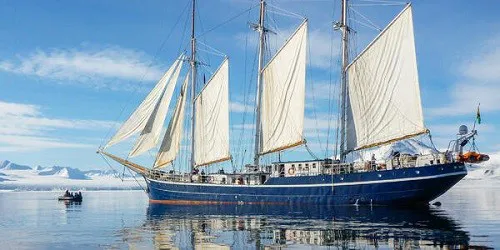
Rembrandt Van Rijn - Oceanwide Expeditions
#2 Oldest Active Cruise Ship
Rembrandt Van Rijn Historical Brief
Introduction
The Rembrandt van Rijn, a handsome three-masted schooner, is one of the oldest vessels still offering authentic expedition cruises anywhere in the world. Launched in 1924 in the Netherlands as a humble herring lugger, she spent nearly seven decades as a hardworking commercial fishing and coastal trading vessel before being lovingly transformed into a passenger sailing ship. Today she carries just 33 adventurous guests to some of the most remote and spectacular corners of the Arctic under Oceanwide Expeditions.
Early Years: Dutch Herring Lugger (1924–1985)
Built in November 1924 by Gebroeders Boot in Leiderdorp, South Holland, the ship was originally named Jacoba and registered as a traditional fishing lugger. She spent her first decades trawling the North Sea for herring under the Dutch flag, a rugged workhorse in one of the most demanding maritime trades of the early 20th century.
Over the following six decades she passed through multiple owners and names — Anna Marta (1928–1962), Minde (1962–1971), and Klaus D (1971–1985) — and sailed under the flags of the Netherlands, Germany, and Denmark. During this long commercial career she served variously as a fishing vessel and coastal trader, proving her durability through countless North Sea voyages and changing economic conditions in European fishing industries.
Transition and Rebirth as a Schooner (1985–1995)
In 1985 the vessel was sold to Stichting Werkgelegenheid Projecten in Groningen and renamed Enno Doedens Star. Two new diesel engines were installed in 1986, but her greatest transformation was yet to come. In 1993 she underwent a complete rebuild in Vlissingen, Netherlands, where she was converted into a three-masted schooner. She was renamed Rembrandt van Rijn in honor of the famous Dutch painter and reflagged to Panama.
This major conversion marked the beginning of her new life as a passenger vessel, preserving her classic lines and sailing character while adding the comforts and safety features needed for expedition cruising.
Expedition Cruise Era and Modern Operations (1995–Present)
From 1994 to 1996 the Rembrandt van Rijn sailed expedition cruises in the Spitsbergen archipelago (Svalbard). In 1998 she began operating in the Galápagos Islands, offering intimate wildlife-viewing voyages until 2001. After a period of lay-up in Ghent, Belgium, she returned to Oceanwide Expeditions’ fleet and underwent a comprehensive rebuilding and modernization program completed in 2011. All navigation, communication, and safety systems were upgraded to the latest SOLAS standards.
Today the Rembrandt van Rijn is based in the Arctic, specializing in voyages around Greenland and Svalbard. With a maximum of only 33 passengers and a dedicated crew of 12, she offers an intimate, sail-powered experience that larger expedition ships simply cannot match. Guests enjoy the thrill of watching the ship glide under canvas through icy fjords, with excellent viewing from open decks even while under sail.
Legacy and Cultural Significance
The Rembrandt van Rijn stands as a remarkable example of maritime adaptation and preservation. From a hardworking 1920s herring lugger to a graceful expedition schooner, her story mirrors the evolution of adventure travel itself — from the gritty commercial fleets of the early 20th century to today’s small-ship, experience-focused polar expeditions.
Her enduring presence in Arctic waters connects modern travelers directly to the golden age of sail while showcasing the best of sustainable, low-impact cruising. The ship has introduced thousands of passengers to the raw beauty of the High Arctic in the most authentic way possible: powered by wind, guided by expert expedition leaders, and surrounded by the same timeless seascapes that have inspired explorers for centuries.
As one of the very oldest active passenger vessels still sailing regular expedition itineraries, the Rembrandt van Rijn is more than just a ship — she is a living piece of maritime history, proudly carrying the spirit of classic seafaring into the 21st century.