
-
Register Now for a Free Account!Unlock additional site access with your free account today, takes less than a minute, and guaranteed no spam - ever. Register Now!
Astoria #4 Oldest Active Cruise Ship - Cruising Earth
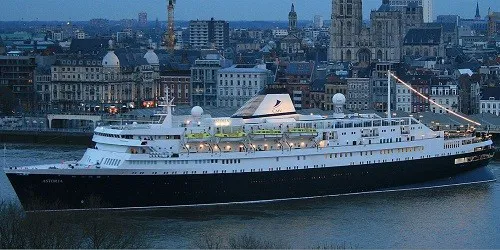
Astoria - Cruise & Maritime Voyages
#4 Oldest Active Cruise Ship
Astoria Historical Brief
Introduction
The Astoria, a classic ocean liner turned cruise ship, is one of the last surviving examples of mid-20th-century transatlantic passenger vessels still in service. Launched in 1948 as the MS Stockholm for the Swedish American Line, she enjoyed an extraordinary 78-year career that spanned ocean liner service, multiple name changes across continents, and eventually intimate cruise voyages. Famous worldwide for her dramatic 1956 collision with the Andrea Doria, the Astoria represents the enduring resilience of classic ship design and the evolution of the modern cruise industry.
Early Years: Transatlantic Ocean Liner (1948–1960)
Built by the Götaverken shipyard in Gothenburg, Sweden, the Stockholm entered service on February 21, 1948, as a stylish, mid-sized transatlantic liner. Designed for regular service between Gothenburg and New York, she carried 480 passengers in two classes and was known for her elegant Swedish Modern interiors, excellent cuisine, and reliable North Atlantic crossings. At 525 feet long and 15,614 gross tons, she was a graceful and efficient liner for her era.
Her most famous — and tragic — moment came on July 25, 1956, when she collided with the Italian liner Andrea Doria in dense fog off Nantucket. The Stockholm’s reinforced ice-breaking bow sliced into the Andrea Doria’s side, causing the Italian ship to sink the following day with the loss of 51 lives. Remarkably, the Stockholm remained afloat, rescued 597 survivors, and returned to New York under her own power despite severe bow damage. The incident remains one of the most famous maritime disasters of the 20th century and cemented the Astoria’s place in maritime history.
Multiple Lives and Global Voyages (1960–2015)
After the collision, the Stockholm was repaired and continued transatlantic service until 1960, when she was sold to the East German government and renamed Völkerfreundschaft (“People’s Friendship”). She served as a cruise ship for the state-owned Deutsche Seereederei, carrying passengers on Baltic and Mediterranean voyages for over two decades.
In the decades that followed she passed through numerous owners and flags, undergoing several major refits and name changes: Volker (1985), Fridtjof Nansen (1986–1993), Italia I, Italia Prima, Valtur Prima, Caribe, Athena (2005–2013), and Azores (2013–2016). She sailed under many operators and in many regions, including the Mediterranean, Caribbean, and even as a hospital ship during certain periods. Each transformation preserved her classic ocean-liner silhouette while adapting her to new roles in the growing cruise market.
Modern Cruise Era as Astoria (2016–Present)
In March 2016 the ship was acquired by Cruise & Maritime Voyages and renamed Astoria. She underwent a major refurbishment to bring her up to contemporary cruise standards while retaining her historic charm. With a passenger capacity of 556 and a crew of 218, she offered classic, destination-focused itineraries that appealed to travelers seeking a more traditional cruising experience aboard a genuine ocean liner.
Throughout her final years in service she continued to delight passengers with her elegant public rooms, spacious decks, and the unmistakable feel of a bygone era of ocean travel — all while maintaining the safety and comfort expected of a modern cruise ship.
Legacy and Cultural Significance
The Astoria stands as a remarkable survivor of the golden age of ocean liners. From her dramatic role in one of maritime history’s most famous collisions to her long and varied career under more than a dozen names and flags, she embodies the adaptability and endurance of classic shipbuilding. For nearly eight decades she connected continents, carried passengers through changing political landscapes, and ultimately helped pioneer the modern expedition and classic cruise niche.
Her story is a living chapter in the history of passenger shipping — a bridge between the grand transatlantic liners of the past and today’s specialized cruise vessels. Even as the industry has evolved toward larger megaships, the Astoria reminds us of the timeless appeal of elegant, intimate ocean travel and the enduring spirit of ships that refuse to be forgotten.