
-
Register Now for a Free Account!Unlock additional site access with your free account today, takes less than a minute, and guaranteed no spam - ever. Register Now!
Cruise Planning Guide - Cruising Earth

Cruise Planning Guide
Cruise Planning Guide Contents
Note: This cruise planning guide includes general cruising information applicable to all cruising types and all cruise lines. Information current as of December 2025.
Pre-Cruise Checklist
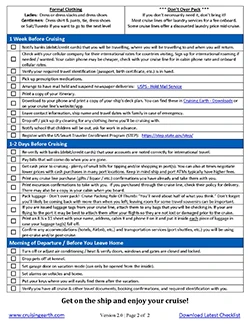
- Cruising Earth Pre-Cruise Checklist v2.0: A comprehensive checklist to help you in preparing and organizing for your next cruise. This pre-cruise checklist takes you step-by-step from booking to embarkation day, covering documents, payments, packing, notifications, and final preparations to ensure a smooth and stress-free start to your vacation.

Required Identification / Travel Documents
- Personal Identification:
- All cruise lines recommend all guests get a passport for their cruise vacation for the following reasons:
- If you miss your ship at its scheduled departure port and need to travel to meet your ship.
- You unexpectedly need to leave the ship from a foreign port prior to the end of sailing, a passport would be required to re-enter your home country by air.
- Passports provide the most seamless re-entry and are essential for any emergency air travel home.
- Many cruise lines also accept other proof(s) of citizenship if your cruise originates and ends in your home country. Check with your cruise line for details if this applies to you. For U.S. citizens on closed-loop cruises, an original or certified birth certificate + government photo ID (ages 16+) is often accepted, but a passport is still the best option for smoother re-entry and to comply with REAL ID requirements for domestic flights after May 7, 2025.
- All cruise lines recommend all guests get a passport for their cruise vacation for the following reasons:
- Minor Travel Consent Forms: Minors (under the age of 18) cruising without both birth parents SHOULD have a travel consent form signed and notarized to carry with them. You will find three different consent forms here with instructions. These forms will cover most circumstances for traveling with minors without both birth parents, providing peace of mind and avoiding potential issues at embarkation or in ports.
- Students: Keep your Student ID with you, students may be eligible for different discounts throughout the cruise, not typically onboard but sometimes in ports and when booking excursions directly. Always ask, you never know for sure till you do.
Cruise Line Apps
- Most major cruise lines now have dedicated mobile apps that have become essential for the modern cruising experience. Download your cruise line's app well in advance of your sailing date.
- These apps typically allow you to complete online check-in, receive your digital boarding pass, make reservations for dining, shows, excursions, and spa treatments, view your onboard account, access the daily planner (replacing paper newsletters), and use onboard messaging features (sometimes with a small fee).
- The app is your primary tool for planning and navigation once onboard—many features work offline or with ship Wi-Fi, making it invaluable for first-timers and veterans alike.
Payments / Budgeting
- If you are cruising on a tight budget, it is recommended that you pay off your cruise as soon as possible prior to the cruise. There are many other financial obligations involved with cruising that will sneak up on you. See Cruise Budget line items below.
- Cruise Budgeting Items:
- Pre-cruise Expenses – clothes shopping, travel essentials, luggage, child care, pet care
- Transportation Expenses (to and from the port) – gas, food, airfare, shuttle services, etc.
- Accommodation Expenses (near the port before and/or after the cruise) – hotel, Airbnb, etc.
- Fixed Cruise Expenses - base cruise fare per person, plus any additional taxes, fees, and any mandatory gratuities (not typical on all lines)
- Onboard Expenses - specialty dining, drink packages, entertainment, internet, spa, arcade, casino, gratuities, etc.
- Port Expenses – excursions, meals, snacks, shopping / souvenirs
- The Unexpected Expenses – it is recommended to give yourself a 10–20% cushion on your overall budget for unexpected and spontaneous expenses, such as medical issues, lost items, or last-minute add-ons.
- Make sure that your bank and credit card companies are aware that you will be going out of the country. Many banks and credit card companies now allow you to enter this information online, they will typically ask what days you will be gone, where you will be going over those days and when you are expecting to be back home. The last thing you want is to be in a foreign country with no access to money because your accounts are flagged for possible fraudulent activity.
Medical Insurance
- Always carry your medical insurance card / information with you while traveling.
- Be aware not all medical insurance plans will have full coverage while traveling and some will not have any coverage at all while traveling.
- Check with your Health Insurance Company before traveling to verify what coverage you may have while traveling and in any foreign country destinations.
- Ships have medical centers, but fees are high and not always covered by standard insurance. Serious cases require expensive evacuation.
- Most travel insurance plans include medical insurance coverage options, see Travel Insurance information below.
Travel Insurance
- Buying travel insurance is always recommended for any costly travel that is not 100% refundable.
- Travel insurance should be purchased within 15 days of booking your cruise and/or flights to maximize your benefits and limit your financial exposure (this window qualifies for pre-existing condition waivers and "cancel for any reason" on many policies).
- Travel Insurance pricing is typically based off of traveler(s) ages and the total price of your vacation, this includes all prepaid expenses that will not be completely refunded.
- Prepaid expenses covered by travel insurance include:
- Cruise Booking – This is the total for all people, you won't need to divide stateroom costs between travelers. Fees, taxes, and other add-ons paid for at the time of purchase should be included.
- Cruise Packages – Pre-paid costs include dining upgrades, unlimited soda options and other drink packages.
- Airfare – If you are flying to your port of arrival, include the costs of any airfare (one-way or round trip) into your total trip cost.
- Shuttle Service – Include costs for a shuttle, bus or taxi, for both embarkation and disembarkation to your total trip cost. You can also add in any pre-paid parking fees if you're driving into the port from home or with a rental car.
- Excursions – When you put money down on any excursion, include those costs.
- If you don't know the total price of your vacation before getting travel insurance, insure your trip for your best estimated total costs. You can add any additional trip costs to your plan after you've made your initial travel insurance purchase, depending on the increased amount, it may result in a change in premium due to benefit levels also increasing.
- Cruise lines typically offer their own insurance options, but they are usually more expensive and typically have less coverage than many third party insurance companies.
- Cruising Earth recommends you price out travel insurance at www.insuremytrip.com. You will find many options from a variety of different insurance companies, along with reviews to help you make your final decision.
River Cruise versus Ocean Cruise
- River cruise ships are smaller.
- River cruise ships average 200 passengers or less, creating a more intimate and personalized experience.
- Ocean cruise ships can top over 3,000 passengers, offering resort-like amenities and a wider variety of facilities.
- River cruise ships offer fewer dining options and dining times
- River cruise ships typically only have one or two dining venues onboard. Dining times are usually set for each meal. Room service is not offered.
- Ocean cruise ships will have many dining options and food will be available at all times of the day and night, including 24-hour venues and room service.
- River cruise ships will offer limited onboard entertainment options
- River cruise ships will have low-key entertainment like a pianist, singer, and possibly a small music group come aboard during a port stop.
- Ocean cruise ships will offer many entertainment options nightly. Comedians, large productions with dancers and possibly even acrobats. Nightly karaoke and trivia games are common.
- River cruise ships are port-intensive
- River cruise ships will visit a new town each day, sometimes two in a day. River cruise ports will be much closer together. The ports on a river cruise are the primary attraction.
- Ocean cruise ships will visit fewer ports and will have "Sea Days" where the ship is not in port for an entire day. The ships themselves are considered an attraction for all the dining and entertainment options they offer.
- River cruise shore excursions are more limited and usually based around cultural experiences
- River cruise ship primary excursions usually involve walking / biking tours enjoying the scenery, music / art appreciation, and other cultural activities in the various port towns. Many are included in the fare.
- Ocean cruise ship excursions are vast in variety and offer not only culturally related excursions but purely for entertainment excursions also (often extra cost).
- River cruise fares are higher but include more
- River cruise fares will typically include all meals and drinks while onboard. Onboard bills will normally be small. Some river cruise lines offer all-inclusive fares covering excursions and gratuities.
- Ocean cruise fares are lower, this is helped by costs being spread over a larger cruising group. You will also pay additional for many dining options and drinks while onboard.
- River cruisers will average around 60 years of age
- Most river cruisers will be 50 years of age or older, many will be retired, seeking a relaxed cultural experience.
- Ocean cruisers will range from children to elderly with a pretty decent number representing every age group, including families.
- River cruisers are normally early to bed and early to rise
- River cruisers will have few late night activities to keep them up. You will need to be up before 9:AM if you want to get breakfast and even at that time you've probably missed the first tours on shore for the day which probably left around 8:AM.
- Ocean cruisers will include early risers and those that will slowly emerge much later after a late night in the piano bar or casino. You can find breakfast offerings till about 11:AM most days, if not later. You can even get it delivered to your room.
Where & When To Cruise?
- Most cruise regions have 3 seasons.
- Peak Demand (High Season) – Usually the best weather, popular travel periods (i.e., summer and school breaks) and typically the most expensive cruise and airfare rates.
- Moderate Demand (Shoulder Season) – This season occurs in the transition time between the Peak & Low Demand Seasons, offering a good balance of weather and pricing.
- Low Demand (Low Season) – Weather can be questionable (i.e., too hot in the Caribbean, too cold in Alaska, hurricane, or rainy season). This is when you will typically find the cheapest cruise rates.
- Cruise Regions and the best time to cruise each (weather, crowds, pricing considerations):
- Alaska: June - August
- Alaska has a very short cruising season; the entire season exists between May and September.
- The best weather will be experienced from June through August and temperatures will range from 50–70 degrees Fahrenheit (10–22 degrees Celsius).
- Cruises that depart mid-week will be less crowded.
- Northbound routes tend to be cheaper than southbound routes.
- Asia: November - March
- The summer months (June - August) are hot and humid. The rates and crowds will be lower at these times.
- Australia: November - March
- The best in Australia is the summer season (November - March).
- Aussies typically vacation in December and January, this is when you can expect the highest cruise rates and biggest crowds.
- Bermuda: June - August
- The busiest season for Bermuda cruises is the summer months (June - August) rates at this time will be higher.
- Hurricane season can affect cruises and the island of Bermuda. The most likely time for this to occur is between August and October.
- Canada / New England: September & October
- The full cruising season runs May through October.
- The best weather will occur in the summer (June - August). If you want to explore New England and Canadian cities this will be your best time to cruise.
- The most popular / busiest time for cruising is typically during fall when the foliage changes (September & October).
- Caribbean: November - April
- The Caribbean cruising season is year round.
- The best time to cruise the Caribbean is November through April. You will find the most moderate temperatures and the least likelihood of rain during this time.
- Hurricane Season (June through November) is typically the cheapest time to cruise the Caribbean. This is also when you will find the hottest temperatures and most rainfall in the region.
- Packed ships with lots of children will be found sailing during Summer vacation (June through August) and school breaks (late December to early January & March through early April).
- Europe Rivers: May - September
- The most popular time for European River cruises is during the summer months, followed by the shoulder season of spring and fall.
- The summer season is best for some popular river cruise excursions like walking tours, hiking, and biking.
- Some significant discounts can typically be found during the shoulder season.
- Christmas season cruises are becoming more popular on rivers like the Danube and the Rhine. The attraction is not the weather but with cities and towns in central Europe adorned with holiday decorations and festivals.
- Hawaii: December - April
- Weather is typically best during the summer and fall with warm temperatures and limited rainfall.
- Summer can get really busy when school is out and it is also a popular wedding/honeymoon season.
- Good deals can be found late September and October when additional cruise ships transition the area after the closing of the Alaskan cruise season.
- Lower rates will be during the Winter months, except for holiday seasons.
- Mediterranean: May - June, September - October
- During peak season (May - June, September - October) temperatures are comfortably warm, the sun is bright, and the crowds are far, far fewer than in the high travel season of July and August.
- The peak season can be extended a little earlier if you are visiting southern Mediterranean destinations.
- August is traditionally the European holiday month, crowds will typically swell at this time.
- The Western Mediterranean is popular in September, when kids go back to school and the weather is still warm.
- Mexican Riviera: February - April
- Best time to cruise this region is during the dry season (November - May).
- The summer months can be rainy.
- Best times are early spring, no rain, and temperatures in the 70s and 80s.
- Whale watching season is February and March.
- Cruises and port destinations can be flooded with college kids during break and summer months.
- Northern Europe & Baltics: May - September
- This region's full cruise season runs April through October.
- Spring colors will start in May and turn brown in October.
- August is traditionally the European holiday month, crowds will typically swell at this time.
- To avoid crowds and experience cooler temperatures, consider traveling in the shoulder months of May and September.
- Some cruise lines will also offer "Northern Lights" cruises in this region from January through March.
- South America: November - March
- The cruise region is very large and for that reason the weather varies greatly. Areas closer to the equator will have a more temperate climate but can also get extremely hot during the Summer months.
- Rates will be significantly higher during holiday seasons.
- South Pacific / Tahiti: May - October
- Weather is more favorable May through October with moderate temperatures and low rainfall.
- The Summer (November - April) when temperatures increase, so does rainfall and in-turn humidity. Rates will typically be lower at this time.
Choosing A Cabin
- Cabin Details: (cabin types, cabin categories, cabin sizes, balcony sizes, bed options, etc.)
- There are four main cabin types:
- Interior: found in the center of the ship, will not have any windows, are typically priced lower than the other cabin categories, and are great for budget-conscious travelers or those who spend little time in the cabin.
- Ocean View: found along the exterior of the ship, will have at least a small porthole or window available (these normally do not open), typically priced higher than the Interior cabins, offering natural light and views.
- Balcony: have a small semi-private balcony area connected to the cabin, typically priced higher than the Ocean View cabins, providing fresh air and private outdoor space.
- Suite: typically also includes a balcony, will also include a larger living space as compared to the other three cabin categories (usually 1.5x-2x more square footage), plus additional perks like priority services and enhanced amenities.
- Cabin Selection:
- If ship movement is a concern:
- The best place is Midship and Lower Decks—least motion felt here.
- The worst place is Forward on the Upper Decks, followed by Aft on the Upper Decks—most motion.
- If noise is a concern:
- If possible choose a cabin that has cabins both above and below it. This will save you from a lot of adjacent room noise, especially from busy public areas (i.e., Lido Deck, Theatre, Night Club, Galley).
- Watch out for "Empty Space." When looking at the ships deck plans you will see empty (unlabeled) space next to and across from some rooms. These are typically closets/storage for the room stewards, which translates into noise very early in the morning and throughout the day!
- Rooms near the elevators and stairs will get more foot traffic passing by and conversations in the hall.
- Engine noise and vibration can be an issue on lower decks in the aft of the ship. Not always, but it is something to think about it.
- Rooms with balconies:
- The forward balcony rooms (first 1/4 of the ship or so) will have a lot more wind than those further back. Some balconies near the very front will be very cool and extremely windy most of the time.
- All side balconies will get a breeze, even the ones near the back of the ship.
- Aft balconies will tend to have no wind at all. They can get hot quickly depending on where you are cruising. They do also offer some of the best panoramic views onboard.
- Guests with disabilities:
- Most cruise ships have cabins designed for guests with disabilities. Some ships have more than others.
- If you don't need and/or aren't qualified for a modified cabin you have to agree before booking it that you are willing to be moved to another cabin if someone with disabilities needs it. It is recommended if you really don't need one don't book it unless it is all there is left.
- All passengers with special needs should also submit a "Special Needs Form" with their specific cruise line prior to the cruise. This will help to inform the cruise ship staff of your specific needs so they can accommodate you to the best of their ability.
- If ship movement is a concern:
- Deck Plans: Becoming familiar with the ship's layout before you cruise can make your time onboard much more enjoyable. It's always nice to be able to find what you want when you want it! Download deck plans for your cruise ship after booking your cruise. Many cruise lines now have mobile apps available with deck plans of their ships included.
Tipping / Gratuities
- Tipping is typically NOT included in the base cruise fare or in the normal fees applied prior to cruising on any cruise line.
- Some cruise lines offer an automatic gratuity service. This service automatically applies daily tips to your onboard account. The tips will automatically be split amongst the staff at a set daily rate (typically $15–$20 per person per day).
- Automatic gratuities are spread amongst many cruise line employees, many of whom you may not personally interact with but will have a hand in how well your cruise goes. Staff may include but not be limited to: Bartenders, Waiters, Room Steward, Porters, Spa Service, Salon Service, and Shore Tour Guides.
- You can also choose to tip over-and-above the automatic gratuities. You can do this by either going to Guest Services and adjusting your automatic gratuities up, or you can tip individuals in person throughout the cruise.
- A tip is expected for Room Service deliveries.
- How you tip is a personal choice you need to make. These are just the facts to help you make a more informed decision.
Embarkation Day
- Bring your bathing suit and a change of clothes in your carry on. Sometimes it takes a while for you to get the rest of your luggage. Some people just wear their bathing suit under their clothes so they can enjoy the pool and hot tubs as soon as they get on the ship.
- Make sure your cellular phone and/or mobile devices are in "Airplane Mode" or off as soon as you set sail. You definitely don't want at sea roaming charges. Just receiving junk mail on your phone or device over the length of the cruise can end up costing you hundreds of dollars in data roaming charges, be careful! Check with your specific cellular carrier for their at sea roaming rates. Check with your cruise line for available data plans onboard.
- Bring-on allowances vary by line, but typically include limited non-alcoholic beverages and 1–2 bottles of wine/champagne per stateroom.
Port / Shore Excursions
- You should attempt to book all shore excursions prior to the cruise. The sooner the better as the most popular excursions tend to book up months ahead of time.
- You do not have to book shore excursions through the cruise line. Do a little homework before you go and you can book your excursions directly. Booking directly typically will save you some money, 20%+ in some cases, and often offers smaller groups or more time in port.
- First time cruisers may want to book through the cruise line to avoid the chance of picking a disreputable company and to ensure the ship waits if the tour is delayed.
- Weather, medical emergencies, mechanical issues, etc. can cause ports to be missed. If you miss a port and you booked the excursion through the cruise line you will get your money back. However, if you are booking an excursion independently (not through the cruise line) make sure to ask whether you get your deposit back if the ship misses that port. Almost all reputable companies will give you a full refund of any money you prepaid.
- When the ship is in port you can always come back on the ship to drop off packages, get changed, etc. and leave the ship again. Remember to be back at least a half-hour before the ship is scheduled to leave port. Missing the ship is a good way to ruin your vacation and put a dent in your savings account trying to get back home.
- Port day perks: Spa specials, bar happy hours, quieter ship for enjoying facilities.